Datasets

Browse and explore our curated collection of biomarker shedding datasets from published studies.

84 datasets

Clinical characteristics of pediatric SARS-CoV-2 infection and coronavirus disease 2019 (COVID-19) in Kuwait

Identifier

alsharrah2020clinical

Participants

29

Measurements

75

Biomarkers

SARS-CoV-2

This study measured SARS-CoV-2 detected by real-time reverse transcriptase PCR in paired oropharyngeal and nasopharyngeal samples from 33 COVID-19 patients in Jaber Alahmad Hospital (JAH). Cycle threshold (Ct) value for E and RdRP genes were measured using Tib MolBiol’s LightMix.

Duration of norovirus excretion and the longitudinal course of viral load in norovirus-infected elderly patients

Identifier

aoki2010duration

Participants

13

Measurements

57

Biomarkers

norovirus

This study investigates the duration of norovirus excretion and the viral load in elderly patients with norovirus gastroenteritis. Conducted in aged-care facilities, the study involved 13 elderly patients aged 60-98 years. A total of 63 fecal samples were collected and analyzed using real-time quantitative polymerase chain reaction assays. The study found that the average period of norovirus excretion was 14.3 days, with viral loads varying significantly over time. The findings suggest that monitoring viral load around 16 days after symptom onset could be useful for managing norovirus infections in such settings.

Longitudinal and quantitative fecal shedding dynamics of SARS-CoV-2, pepper mild mottle virus, and crAssphage

Identifier

arts2023longitudinal

Participants

48

Measurements

1502

Biomarkers

SARS-CoV-2 PMMoV crAssphage

The authors present longitudinal, quantitative fecal shedding data for SARS-CoV-2 RNA, pepper mild mottle virus (PMMoV) RNA, and crAss-like phage (crAssphage) DNA from 48 COVID-19 patients. Abundances were quantified using (RT)-ddPCR assays targeting the N and ORF1a genes. The data were obtained from supplementary material.

Norwalk virus shedding after experimental human infection

Identifier

atmar2008norwalk

Participants

16

Measurements

182

Biomarkers

norovirus

This study investigates the magnitude and duration of Norwalk virus shedding in feces following experimental human infection. Conducted at Baylor College of Medicine from September 2004 to October 2006, the study involved 16 healthy adults aged 18-50 who were inoculated with Norwalk virus. Participants were monitored for clinical signs and symptoms, and fecal samples were collected and analyzed using RT-PCR and ELISA methods. The study found that virus shedding began as early as 18 hours post-inoculation and lasted a median of 28 days, with peak virus titers occurring after symptom resolution. The study provides insights into the prolonged fecal excretion of norovirus and its implications for transmission.

Influenza and respiratory syncytial virus screening for the detection of asymptomatically infected patients in hematology and oncology

Identifier

baier2018influenza

Participants

6

Measurements

20

Biomarkers

influenza RSV

Retrospective analysis of a prophylactic seasonal RT-PCR screening program (Dec 2016 to Apr 2017) for influenza A/B and RSV among hospitalized asymptomatic patients on pediatric and adult hemato-oncological wards at Hannover Medical School (Germany). Respiratory specimens (mostly nasopharyngeal swabs; some pharyngeal lavage/oral wash) were tested by real-time RT-PCR and viral load changes were assessed semi-quantitatively using PCR cycle threshold (Ct) values. The CSV-provided data include longitudinal Ct values over days after the initial positive screening timepoint for 6 asymptomatic patients (5 influenza A; 1 RSV).

Prolonged viral replication and longitudinal viral dynamic differences among respiratory syncytial virus infected infants

Identifier

brint2017prolonged

Participants

25

Measurements

212

Biomarkers

RSV

Longitudinal RSV viral load study in 51 naturally infected, hospitalized RSV-PCR+ infants (<1 year old) during the 2014–2015 RSV season. Quantitative nasal aspirate/nasal wash samples were collected serially during hospitalization and follow-up visits up to ~1 month after symptom onset. Viral load was measured using TaqMan-based real-time qRT-PCR targeting the RSV N gene with subtype-specific primers (RSV-A and RSV-B), and results were reported as plaque-forming unit equivalents per mL.

Presymptomatic viral shedding in high-risk mpox contacts: A prospective cohort study

Identifier

brosius2023presymptomatic

Participants

12

Measurements

490

Biomarkers

mpox

Prospective cohort of 25 high-risk contacts of clade IIb monkeypox virus (MPXV) cases recruited in Antwerp, Belgium (June 24–July 31, 2022). Participants performed daily self-sampling (anorectal, genital, saliva) and attended weekly clinic visits (blood, oropharyngeal, etc.). Samples were tested by an in‑house MPXV PCR (targeting the MPXV-TNF receptor gene) on an Applied Biosystems QuantStudio. Study documents presymptomatic MPXV DNA detection (Ct values) and culture of replication-competent virus from presymptomatic anorectal samples.

Rotavirus A shedding and HBGA host genetic susceptibility in a birth community-cohort, Rio de Janeiro, Brazil, 2014-2018

Identifier

cantelli2020rotavirus

Participants

46

Measurements

50

Biomarkers

rotavirus vaccine

Prospective birth community-cohort study in Manguinhos, Rio de Janeiro, Brazil (2014–2018) following infants through <1 year of age who received Rotarix (RV1) oral rotavirus vaccine. Stool samples were collected and screened for rotavirus A shedding using RT-qPCR (Ct), with RV1 G1P[8] characterization and VP8* sequencing (including F167L mutation). This extraction captures individual Ct values and days post-vaccination (or pre-dose/non-vaccinated sampling) from the provided CSV/table for Le(a+b+) secretor children.

Centers for Disease Control and Prevention (CDC) Nursing Home Public Health Response Network (NHPHRN)

Identifier

cdc2024nhphrn

Participants

84

Measurements

2758

Biomarkers

SARS-CoV-2

The INHERENT study, part of the CDC funded Nursing Home Public Health Response Network (NHPHRN), examined SARSCoV2 shedding in nursing home residents and staff. It characterized the viral shedding kinetics including proliferation, peak, and clearance using qRTPCR, antigen testing, genetic sequencing, and culture. The original dataset is published and updated on their GitHub repository (https://github.com/YWAN446/cdc2024nhphrn/tree/main/).

A pilot study on use of live attenuated rotavirus vaccine (Rotarix™) as an infection challenge model

Identifier

chilengi2020pilot

Participants

21

Measurements

48

Biomarkers

rotavirus

This study evaluates the use of Rotarix™ as a live-attenuated challenge agent in a cohort of 22 Zambian infants. The infants received two standard doses of the vaccine at 6 and 10 weeks of age. The study aimed to assess stool shedding of rotavirus using NSP2 qPCR, with samples collected on days 0, 3, 5, 7, 14, and 28 following each dose. The primary outcome was the viral shedding index, calculated as the average natural logarithm of viral copies per gram of stool. The study found that viral shedding was high after the first dose but reduced after the second dose, indicating the induction of mucosal immunity. The study supports the use of Rotarix as a live-attenuated infection challenge model.

Temporal dynamics of RSV shedding and genetic diversity in adults during the COVID-19 pandemic in a French hospital, early 2021

Identifier

coppee2023temporal

Participants

8

Measurements

33

Biomarkers

RSV

Hospital-based observational study in adults admitted to Foch hospital (Suresnes, France) between Jan 1 and Mar 31, 2021. Systematic nasopharyngeal swab testing using the Alinity M RESP-4-Plex RT-PCR assay identified 8 RSV-positive adults (patients A–H). This extraction captures RSV RT-PCR cycle threshold (Ct) values over time from a figure-derived CSV; symptomatic participants are timed from symptom onset, and asymptomatic participants are timed from first positive PCR (confirmation date).

Clinical and virologic characteristics of the first 12 patients with coronavirus disease 2019 (COVID-19) in the United States

Identifier

covid2020clinical

Participants

12

Measurements

442

Biomarkers

SARS-CoV-2

This study describes the first 12 COVID-19 patients identified in the United States, tracking their clinical progression and virological characteristics. SARS-CoV-2 was detected by real-time reverse transcriptase PCR in stool, urine, serum, sputum, oropharyngeal and nasopharyngeal swabs for 2 to 3 weeks after symptom onset. Results were reported in cycle threshold (Ct) values.

Rotavirus shedding following administration of RV3-BB human neonatal rotavirus vaccine

Identifier

cowley2017rotavirus

Participants

16

Measurements

239

Biomarkers

rotavirus vaccine

This study investigates the shedding and replication of the RV3-BB human neonatal rotavirus vaccine in a phase IIa trial conducted in Dunedin, New Zealand, from January 2012 to April 2014. The trial involved 96 healthy, full-term neonates who were randomly assigned to receive three doses of the RV3-BB vaccine or placebo. The study aimed to characterize rotavirus shedding in stool samples collected on days 3-7 post-vaccination using VP6 RT-PCR. The trial included neonatal and infant vaccination schedules, with the first dose administered at 0-5 days or 8 weeks after birth, respectively. The study found significant rotavirus shedding in both schedules, with >70% of participants shedding the vaccine virus. The study used quantitative qRT-PCR to measure stool viral load and assessed the relationship between viral load and serological response.

Fatal outcome of human influenza A (H5N1) is associated with high viral load and hypercytokinemia

Identifier

de2006fatal

Participants

2

Measurements

22

Biomarkers

influenza

Virological and immunological study of patients hospitalized in Ho Chi Minh City (2004–2005) comparing 18 individuals with influenza A(H5N1) (13 fatal, 5 non-fatal) and 8 patients with human influenza (H3N2/H1N1). Pharyngeal (throat) and nasal swabs, rectal swabs and blood were collected; viral RNA was quantified by real-time PCR targeting a conserved region of the influenza A matrix gene (results expressed as cDNA copies per ml of viral transport medium). The study reports higher pharyngeal viral loads and frequent detection of viral RNA in blood and rectum in H5N1 cases, and elevated plasma cytokine/chemokine levels that correlated with pharyngeal viral load.

Safety and Antiviral Effects of Nebulized PC786 in a Respiratory Syncytial Virus Challenge Study

Identifier

devincenzo2022safety

Participants

12

Measurements

19

Biomarkers

RSV

Randomized, single-blind, placebo-controlled RSV-A (Memphis 37b) human challenge study in healthy adult volunteers (18–55 years). Participants were inoculated intranasally on study day 0 and received nebulized PC786 (5 mg) or placebo twice daily for 5 days starting ~12 hours after RSV detection or on day 6. RSV viral load was monitored in nasal wash samples by Simplexa RT-qPCR; this extraction includes individual-level measurements digitized to CSV (PatientID, day, value, treatment).

Respiratory syncytial virus load, viral dynamics, and disease severity in previously healthy naturally infected children

Identifier

el2011respiratory

Participants

8

Measurements

30

Biomarkers

RSV

Observational study of previously healthy children <2 years old with naturally acquired RSV infection; RSV load in respiratory secretions was measured by fresh quantitative culture over serial hospital days to evaluate viral dynamics and associations with disease severity outcomes (eg, length of hospitalization, ICU requirement, respiratory failure).

Similarities in rotavirus vaccine viral shedding and immune responses in pairs of twins

Identifier

enya2023similarities

Participants

20

Measurements

347

Biomarkers

rotavirus vaccine

Prospective cohort study of 20 infants (four twin pairs and twelve singletons) admitted to the neonatal intensive care unit at Fujita Health University Hospital (Japan), born Nov 2018–Jun 2020, receiving two doses of Rotarix (RV1). Stool was collected daily from vaccination day (day 0) through day 8 after each dose to quantify fecal RV1 vaccine-strain shedding by RV1-specific qRT-PCR (reported here as gene copies per PCR reaction from figure-derived CSV).

SARS-CoV-2 viral load is associated with increased disease severity and mortality

Identifier

fajnzylber2020sars

Participants

88

Measurements

434

Biomarkers

SARS-CoV-2

The paper quantified SARS-CoV-2 viral load from participants with a diverse range of COVID-19 disease severity, including those requiring hospitalization, outpatients with mild disease, and individuals with resolved infections. Blood was collected from hospitalized participants, non-hospitalized symptomatic individuals seeking care at a respiratory infection clinic, and participants who had recovered from known COVID-19 disease. Nasopharyngeal swabs, oropharyngeal swabs, sputum, and urine were collected from hospitalized participants. Data were obtained from the supplementary materials.

Comparison of quantitative reverse transcription-PCR to viral culture for assessment of respiratory syncytial virus shedding

Identifier

falsey2003comparison

Participants

12

Measurements

168

Biomarkers

RSV

Comparative study of RSV shedding in adult volunteers experimentally challenged with RSV A2, comparing quantitative real-time RT-PCR results with viral culture across multiple postinfection days (0-12 and day 28). CSV-provided measurements represent a time series per subject (PatientID 1-5) with values recorded by day relative to infection/challenge.

Viral shedding and susceptibility to oseltamivir in hospitalized immunocompromised patients with influenza in the Influenza Resistance Information Study (IRIS)

Identifier

fraaij2015viral

Participants

4

Measurements

14

Biomarkers

influenza

Observational substudy of the Influenza Resistance Information Study (IRIS) in immunocompromised patients with influenza. Nasal and throat swabs were analysed by RT-PCR on day 1 and then every 3 days until patients were virus-free to assess viral shedding and emergence of oseltamivir resistance (H275Y). Of 42 enrolled patients, 29 were influenza RT-PCR positive on day 1 (18 adults, 11 children). Resistance (H275Y) was detected in some post-baseline samples; clinical and virological outcomes were described.

Infectious viral shedding of SARS-CoV-2 Delta following vaccination: A longitudinal cohort study

Identifier

garciaknight2022infectious

Participants

82

Measurements

985

Biomarkers

SARS-CoV-2

Longitudinal cohort study (San Francisco Bay Area, Sep 2020–Oct 2021) comparing nasal SARS-CoV-2 RNA and infectious virus shedding in 84 non-hospitalized adults (52 unvaccinated, 32 fully vaccinated). Participants self-collected anterior nasal swabs daily for up to 14 days and intermittently to day 28. RT-qPCR quantified N and E gene copies/mL using plasmid standards; viral culture (CPE) and plaque assays on Vero-hACE2-TMPRSS2 cells assessed infectious virus. Time values are reported relative to symptom onset. The provided CSV contains per-participant quantitative RT-qPCR measurements for N and E (copies/mL) and vaccination category.

Hydroxychloroquine and azithromycin as a treatment of COVID-19:results of an open-label non-randomized clinical trial

Identifier

gautret2020hydroxychloroquine

Participants

19

Measurements

126

Biomarkers

SARS-CoV-2

This study evaluated the effect of hydroxychloroquine on respiratory viral loads. Six patients were asymptomatic, 22 exhibited upper respiratory tract infection symptoms, and eight showed lower respiratory tract infection symptoms. Only 19 patients with a known onset of symptoms were included in the analysis below. Data for the nasopharyngeal swab results were obtained from the combined dataset in the supplementary materials of Challenger et al. (2022). Attributes of drug treatments were sourced from the supplementary materials of the original paper.

Viral load in hospitalized infants with respiratory syncytial virus bronchiolitis: a three-way comparative analysis

Identifier

golantripto2024viral

Participants

13

Measurements

100

Biomarkers

RSV

Prospective cohort study of hospitalized infants (<12 months) with acute bronchiolitis at Soroka Medical Center. For each infant, paired respiratory specimens were collected at hospital admission (day 0) and ~48 hours later (day 2): nasopharyngeal swabs and nasal lavage (nasal wash) fluid, each placed in two different transport media (UTM and VCM). Quantitative RT-PCR viral load results (reported as virus particles per mL, vp/mL) are provided here from figure-derived CSV data, stratified by specimen type and transport medium; RSV subtype (A or B) is available per patient in the CSV.

Nosocomial acute gastroenteritis outbreak caused by an equine-like G3P[8] DS-1-like rotavirus and GII.4 Sydney[P16] norovirus at a pediatric hospital in Rio de Janeiro, Brazil, 2019

Identifier

gutierrez2021nosocomial

Participants

9

Measurements

18

Biomarkers

rotavirus norovirus

This study investigates a nosocomial outbreak of acute gastroenteritis caused by rotavirus and norovirus at a pediatric hospital in Rio de Janeiro, Brazil, in May 2019. The outbreak affected 30 individuals, including children and hospital staff. Nine stool samples were analyzed using RT-qPCR to detect and quantify the viruses. The study identified the circulation of equine-like G3P[8] DS-1-like rotavirus and GII.4 Sydney[P16] norovirus. The study emphasizes the importance of active surveillance and prevention measures to control nosocomial infections in hospital settings.

Onset and window of SARS-CoV-2 infectiousness and temporal correlation with symptom onset: a prospective, longitudinal, community cohort study

Identifier

hakki2022onset

Participants

50

Measurements

1428

Biomarkers

SARS-CoV-2

Through a prospective, longitudinal, community cohort study that captures the critical growth phase and peak of viral replication, the goal is to characterize the window of SARS-CoV-2 infectiousness and its temporal relationship with symptom onset.

Sequential Analysis of Viral Load in a Neonate and Her Mother Infected With Severe Acute Respiratory Syndrome Coronavirus 2

Identifier

han2020sequential

Participants

2

Measurements

51

Biomarkers

SARS-CoV-2

The study reports SARS-CoV-2 viral loads in different specimen types for a neonate and her mother diagnosed on 2020-03-20. The study includes nasopharyngeal, oropharyngeal, stool, plasma, saliva, and urine samples. Viral loads were extracted manually from Figure 1 using WebPlotDigitizer.

Rotavirus Vaccination Can Be Performed Without Viral Dissemination in the Neonatal Intensive Care Unit

Identifier

hiramatsu2018rotavirus

Participants

19

Measurements

200

Biomarkers

rotavirus vaccine

Prospective NICU study (Oct 2014–Dec 2015) assessing fecal shedding and dissemination of rotavirus vaccine strains after oral vaccination with RotaTeq (RV5) or Rotarix (RV1). Nineteen vaccinated infants (9 RV5, 10 RV1) and 49 nearby unvaccinated infants were enrolled; stool (and some rectal swab) samples were serially collected and tested by vaccine-strain specific real-time RT-PCR. Vaccine-strain shedding was detected in all vaccinated infants but no vaccine genomes were detected in any samples from unvaccinated infants. The provided CSV contains cycle-threshold (Ct) time-series (days after vaccination) extracted from Figure 2 for RV5-vaccinated infants.

Association between adverse clinical outcome in human disease caused by novel influenza A H7N9 virus and sustained viral shedding and emergence of antiviral resistance

Identifier

hu2013association

Participants

14

Measurements

341

Biomarkers

influenza

Study of 14 patients with novel influenza A H7N9 admitted to Shanghai Public Health Clinical Centre in April 2013. Viral RNA was quantified sequentially in throat (oropharyngeal) swabs, stool, serum, and urine; viral sequencing of neuraminidase (NA) was performed to assess emergence of resistance. Paper links reduction in viral load after antivirals with improved outcome and reports persistent high viral load and emergence of NA Arg292Lys resistance in some patients. The provided CSV contains 69 measurements from patients with IDs 1, 2, and 3 across the four specimen types.

Quantitative analysis of fecal sapovirus shedding: identification of nucleotide substitutions in the capsid protein during prolonged excretion

Identifier

iwakiri2009quantitative

Participants

17

Measurements

41

Biomarkers

sapovirus

This study quantifies Sapovirus (SaV) RNA shedding in stool from two outbreak cases using real-time RT-PCR, revealing that SaV excretion generally declines within two weeks but can persist at high concentrations for up to four weeks in some individuals. The study also identifies nucleotide substitutions in the VP1 gene during prolonged excretion, suggesting potential viral evolution.

Differentiation between Wild-Type Group A Rotaviruses and Vaccine Strains in Cases of Suspected Horizontal Transmission and Adverse Events Following Vaccination

Identifier

jacobsen2022differentiation

Participants

28

Measurements

28

Biomarkers

rotavirus vaccine

This study investigates the differentiation between wild-type Group A rotaviruses (RVA) and vaccine strains in cases of suspected horizontal transmission and adverse events following vaccination. Conducted in Germany, the study involved 74 patients, including 68 vaccinated children and 6 cases of suspected horizontal transmission, from 2009 to 2019. The study utilized a PCR-based algorithm to distinguish between vaccine-like and wild-type RVA strains in stool samples. The study found that vaccine-like virus was detected in 46 samples, wild-type RVA in 6 samples, and mixed infections in 3 samples. The study also explored co-infections with other pathogens and the shedding of vaccine strains in immunocompromised patients.

Estimating infectiousness throughout SARS-CoV-2 infection course

Identifier

jones2021estimating

Participants

25378

Measurements

29712

Biomarkers

SARS-CoV-2

This study analyzed viral load data from 25,381 German cases, including 9519 hospitalized patients, 6110 PAMS cases from walk-in test centers, 1533 B.1.1.7 variant infections, and the viral load time series of 4434 (mainly hospitalized) patients. Viral load results were then combined with estimated cell culture isolation probabilities, producing a clinical proxy estimate of infectiousness. Data were obtained from the ‘viral-load-with-negatives.tsv’ dataset in the GitHub repository of Jones et al. (2021). Samples lacking a known onset date or a detected positive test result were filtered out.

Presence of enteric hepatitis viruses in the sewage and population of Greater Cairo

Identifier

kamel2011presence

Participants

36

Measurements

36

Biomarkers

hepatitis A virus

This study conducted a survey of hepatitis A virus (HAV) and hepatitis E virus (HEV) in patients and sewage in Cairo, Egypt. The study found that HAV (genotype IB) was predominant over HEV (genotype 3) and was circulating in the population and the environment. The study involved analyzing patient samples for HAV viral load and genotype, as well as measuring bilirubin levels. The reference event for the measurements was symptom onset or diagnosis.

Shedding of pandemic (H1N1) 2009 virus among health care personnel, Seattle, Washington, USA

Identifier

kay2011shedding

Participants

14

Measurements

43

Biomarkers

influenza

Outbreak investigation of pandemic (H1N1) 2009 among hospital-associated retreat attendees in Seattle (September 2009). Sixteen health care personnel with laboratory-confirmed infection provided serial self-collected nasal wash specimens (every Mon/Wed/Fri) and symptom logs; specimens were tested by real-time RT-PCR (quantified as RNA copies/mL) and rapid culture. Study evaluated duration of viral RNA detection and culture positivity relative to symptom onset and fever, and found RT-PCR detection lasted longer (3–13 days) than culture (3–10 days). All infected HCP received oseltamivir early in illness.

Daily Longitudinal Sampling of SARS-CoV-2 Infection Reveals Substantial Heterogeneity in Infectiousness

Identifier

ke2022daily

Participants

60

Measurements

1699

Biomarkers

SARS-CoV-2

The authors studied the dynamics of infectious virus and viral RNA shedding for SARS-CoV-2 during acute infection through daily longitudinal sampling of 60 individuals for up to 14 days. Nasal swab and saliva samples were collected daily and tested for University of Illinois at Urbana-Champaign faculty, staff, and students (during the fall of 2020 and spring of 2021) who reported a negative RT-qPCR test result in the past 7 days and were either within 24 h of a positive RT-qPCR result or within 5 days of exposure to someone with a confirmed positive RT-qPCR result.

Viral Load Kinetics of SARS-CoV-2 Infection in First Two Patients in Korea

Identifier

kim2020viral

Participants

2

Measurements

170

Biomarkers

SARS-CoV-2

The authors present viral load kinetics for the first two confirmed COVID-19 patients with mild to moderate illness in Korea. Swabs, sputum, serum, plasma, urine, and stool samples were collected throughout the illness. Cycle threshold (Ct) values were quantified using rRT-PCR targeting the RdRp and E genes. Data were obtained from the supplementary material.

Viral kinetics of SARS-CoV-2 in asymptomatic carriers and presymptomatic patients

Identifier

kimse2020viral

Participants

13

Measurements

61

Biomarkers

SARS-CoV-2

The authors measured SARS-CoV-2 in longitudinal oropharyngeal swab samples collected from 71 COVID-19 patients between February 4 and April 7, 2020.

Vomiting as a Symptom and Transmission Risk in Norovirus Illness: Evidence from Human Challenge Studies

Identifier

kirby2016vomiting

Participants

9

Measurements

77

Biomarkers

norovirus

This study investigates the role of vomiting in norovirus transmission using data from human challenge studies with GI.1 Norwalk virus, GII.2 Snow Mountain virus, and a pilot study with GII.1 Hawaii virus. The study involved healthy adult subjects who were challenged with norovirus and monitored for symptoms, including vomiting. Emesis samples were collected and analyzed for viral titers using strain-specific quantitative RT-PCR. The study found that vomiting is a common symptom in norovirus infection and contributes significantly to environmental contamination and transmission risk. The study provides quantitative data on virus titers in emesis, which is critical for risk assessment and control measures.

Densely sampled viral trajectories suggest longer duration of acute infection with B.1.1.7 variant relative to non-B.1.1.7 SARS-CoV-2

Identifier

kissler2021densely

Participants

65

Measurements

3882

Biomarkers

SARS-CoV-2

This study analyzed densely sampled longitudinal RT-qPCR data from 65 individuals infected with SARS-CoV-2, including 7 infected with the B.1.1.7 (Alpha) variant, using each person’s lowest Ct value as the reference event time point. Inclusion criteria required each individual to have at least 5 positive PCR tests (Ct < 40), including at least one with Ct < 35. Ct value were collected using the Roche cobas target 1 assay and converted to estimated RNA viral concentrations via a standard curve and log-linear transformation.

Viral dynamics of acute SARS-CoV-2 infection and applications to diagnostic and public health strategies

Identifier

kissler2021viral

Participants

68

Measurements

4822

Biomarkers

SARS-CoV-2

This study followed 68 people (90% male) during the NBA 2019 to 2020 season with frequent RT-qPCR to map SARS-CoV-2 viral RNA trajectories and 46 had acute infections. A single low Ct (<30) strongly indicates acute infection, and a second PCR within 48 hours helps tell whether someone is early (proliferation) or late (clearance) in infection.

Influenza Virus Shedding in Laninamivir-Treated Children upon Returning to School

Identifier

kondo2016influenza

Participants

28

Measurements

84

Biomarkers

influenza

Study of influenza virus shedding in pediatric patients treated with laninamivir during the 2011-2012 influenza season in Niigata Prefecture, Japan. Nasal discharge samples were collected at three visits (before treatment, 3-5 days after first visit, and 5-9 days after first visit) and assessed by virus culture (TCID50) and quantitative real-time PCR targeting the M gene. The paper enrolled 28 children (7 infected with influenza A(H3N2) and 21 with influenza B) and evaluated duration of fever, virus isolation, viral RNA detection rates, and antiviral susceptibility. The CSV data provided contain quantitative viral RNA measurements (genome-equivalent copies) for a subset of participants.

Small quantities of respiratory syncytial virus RNA only in large droplets around infants hospitalized with acute respiratory infections

Identifier

kutter2021small

Participants

18

Measurements

58

Biomarkers

RSV rhinovirus

Hospital-based observational study in Delft, The Netherlands (Nov 2017–Apr 2020) of 6 hospitalized infants (0–2 years) with laboratory-confirmed RSV-B infection (two with rhinovirus co-infection). Longitudinal RSV (and RV where applicable) RNA detection was performed by qRT-PCR (Ct values; Ct>40 negative) on nasopharyngeal aspirates from infants and nose/throat swabs from parents; air sampling around infants used a six-stage Andersen cascade impactor with subsequent qRT-PCR, and infectious RSV was assessed by culture (TCID50) on HEp-2 cells (not extracted here because no individual-level TCID50 values were provided in the supplied CSV/table extraction). Times in the provided figure-derived CSV are treated as days relative to symptom onset (reference event).

Suppression of a SARS-CoV-2 outbreak in the Italian municipality of Vo

Identifier

lavezzo2020suppression

Participants

141

Measurements

526

Biomarkers

SARS-CoV-2

This study was conducted in the Italian municipality of Vo. Lockdown was implemented after first death of pneumonia was reported. Two surveys and virus tests were conducted with the first survey near the start of lockdown and the second one at the end of lockdown

Clinical and virological data of the first cases of COVID-19 in Europe: a case series

Identifier

lescure2020clinical

Participants

5

Measurements

42

Biomarkers

SARS-CoV-2

The authors followed five patients admitted to Bichat-Claude Bernard University Hospital (Paris, France) and Pellegrin University Hospital (Bordeaux, France) and diagnosed with COVID-19 by semi-quantitative RT-PCR on nasopharyngeal swabs. We assessed patterns of clinical disease and viral load from different samples (nasopharyngeal and blood, urine, and stool samples), which were obtained once daily for 3 days from hospital admission, and once every 2 or 3 days until patient discharge. Stool samples only have positive and negative results (currently not included in this data). The data was obtained from Goyal et al. 2020 for the nasopharyngeal swab results in 4 patients.

Faecal shedding of rotavirus vaccine in Chinese children after vaccination with Lanzhou lamb rotavirus vaccine

Identifier

li2018faecal

Participants

16

Measurements

143

Biomarkers

Lanzhou lamb rotavirus vaccine

Prospective post-marketing study of faecal shedding after oral Lanzhou lamb rotavirus vaccine (LLR) in children in China (September–November 2011/2012). 114 children provided 1,184 stool samples collected for 15 days post-vaccination. Shedding was assessed by enzyme immunoassay (EIA, Oxoid Prospect ELISA kit, EIA positive threshold OD=0.21) and by real-time RT-PCR targeting the NSP3 gene (quantified by plasmid standard curve). Viral loads in PCR-positive samples ranged from <1.0×10^3 to 1.9×10^8 copies/g stool. Reference time for all measurements is days post-vaccination.

Longitudinal Fecal Shedding of SARS-CoV-2, Pepper Mild Mottle Virus, and Human Mitochondrial DNA in COVID-19 Patients

Identifier

liu2024longitudinal

Participants

42

Measurements

465

Biomarkers

SARS-CoV-2 PMMoV mtDNA

The authors measured SARS-CoV-2, pepper mild mottle virus (PMMoV), and human mitochondrial DNA (mtDNA) in longitudinal stool samples collected from 42 COVID-19 patients for up to 42 days after the first sample collection date. Abundances were quantified using Digital PCR assays targeting the N1 genes. The symptom data (e.g., fever, cough, short of breath, diarrhea, headache, loss of smell, loss of taste, etc.) is currently not included in this data.

Viral dynamics of SARS-CoV-2 across a spectrum of disease severity in COVID-19

Identifier

lui2020viral

Participants

11

Measurements

43

Biomarkers

SARS-CoV-2

Lui et al. report on a prospective cohort study of patients with variable disease severity. Viral loads for positive samples were extracted from Tbl. 1 in the supplementary material, and negatives were extracted manually from Fig. 1 and a figure in the supplementary material. The level of quantification was extracted from methods in the supplementary material. Data for other specimen types, including nasopharyngeal swabs, sputum, plasma, and urine, are also available in the source but have not yet been included here.

Detection of hepatitis A virus RNA in saliva

Identifier

mackiewicz2004detection

Participants

6

Measurements

12

Biomarkers

hepatitis A virus

This study, conducted from November 2002 to November 2003, investigated the presence of hepatitis A virus (HAV) RNA in saliva and serum samples from six acutely infected patients with HAV viremia. The study was conducted at a hospital in France, and the participants were aged between 15 and 47 years. The study aimed to explore the potential of using saliva samples for outbreak investigations due to the ease of collection. HAV RNA was detected in the saliva of five out of six patients, with viral loads in saliva being 2 logs lower than in serum. The study utilized RT-PCR and real-time PCR assays for detection and quantification, with a focus on the VP1/2A junction of the HAV genome. The study also included phylogenetic analysis to determine HAV genotypes.

Shedding of porcine circovirus type 1 DNA and rotavirus RNA by infants vaccinated with Rotarix®

Identifier

mijatovicrustempasic2017shedding

Participants

33

Measurements

537

Biomarkers

rotavirus vaccine

This study investigated the shedding of porcine circovirus type 1 (PCV-1) DNA and Rotavirus group A (RVA) RNA in 33 infants aged approximately 2 months following the first dose of Rotarix® vaccine. Stool samples were collected serially post-vaccination and analyzed using molecular methods. The study found that 21% of infants did not shed RVA RNA beyond day 3, suggesting a lack of vaccine virus replication in some cases. The study was conducted in Atlanta, Georgia, and involved both full-term and preterm infants. The analysis used quantitative real-time RT-PCR and qPCR assays to detect viral RNA and DNA in stool samples.

Rotavirus vaccine strain transmission by vaccinated infants in the foster home

Identifier

miura2017rotavirus

Participants

3

Measurements

146

Biomarkers

rotavirus vaccine

Prospective surveillance in a foster home setting assessing shedding and transmission of rotavirus vaccine strains. Stool samples were collected and tested by quantitative real-time RT-PCR. The study included 4 RV-vaccinated infants (160 samples) and 23 unvaccinated infants (766 samples). Vaccine-strain RNA was persistently detected in stool from the four vaccine recipients and in one unvaccinated infant (who had been vaccinated prior to enrollment). Quantitative RT-PCR data showed a peak RNA load about 1 week after vaccination followed by gradual decrease. Study suggests limited transmission of vaccine strains in close-contact environment.

Long-term viral shedding and viral genome mutation in norovirus infection

Identifier

miyoshi2015long

Participants

4

Measurements

37

Biomarkers

norovirus

This study investigates the duration of viral shedding in patients from two outbreaks and four sporadic cases of norovirus (NoV) infections. The research highlights the longest period of viral shedding into feces, which was 173 days in an inpatient from one outbreak case. The study also examines the VP1 sequence from two long-term viral shedding cases, revealing several mutations. The findings suggest that the long-term carrier state of norovirus infection contributes to the generation of escape mutants by host immunoselection.

Gastrointestinal symptoms and fecal shedding of SARS-CoV-2 RNA suggest prolonged gastrointestinal infection

Identifier

natarajan2022gastrointestinal

Participants

113

Measurements

7563

Biomarkers

SARS-CoV-2

Fecal samples were collected from 113 participants “in a randomized controlled study of Peg-interferon lambda-1a versus a placebo control for the treatment of mild to moderate COVID-19.” A total of 7,563 measurements were taken for 679 samples using seven distinct assays; assays were typically run in duplicates.

Samples were initially collected using OMNIGene GUT collection tubes (OG) but subsequently replaced with Zymo DNA/RNA shield fecal collection tubes (ZY) because of better performance. There are consequently 14 analytes following the naming convention {target gene E, RdRP, N1, or N2}-{genomic RNA (gRNA) or subgenomic RNA (sgRNA)}-{quantification method RT-qPCR or ddPCR}-{collection tube OG or ZY}.

The reference event for temporal offsets in days is the day of enrollment.

Single base substitutions in the capsid region of the norovirus genome during viral shedding in cases of infection in areas where norovirus infection is endemic

Identifier

obara2008single

Participants

2

Measurements

11

Biomarkers

norovirus

This study investigates norovirus (NoV) infections in Toyama Prefecture, Japan, during fiscal year 2006, focusing on viral shedding in feces. The study involved 30 individuals from a local hotel outbreak in May 2006, with stool specimens collected and analyzed using real-time PCR. Two employees exhibited long-term viral shedding, with single base substitutions in the NoV capsid region observed. The study highlights the potential for NoV evolution in the gastrointestinal tract, with genetic changes occurring during the infectious course. The research was supported by a Health Labor Sciences Research Grant from the Japanese Ministry of Health, Labor, and Welfare.

Prevalence and duration of SARS-CoV-2 fecal shedding in breastfeeding dyads following maternal COVID-19 diagnosis

Identifier

pace2024prevalence

Participants

64

Measurements

369

Biomarkers

SARS-CoV-2

This study examined whether and to what extent SARS-CoV-2 is detectable in the feces of lactating women and their breastfed infants following maternal COVID-19 diagnosis. A total of 57 maternal-infant dyads provided maternal and/or infant fecal samples, including 33 dyads in the COVID-19 group and 24 dyads in the healthy group. Fecal samples were collected from each mother and child in both the groups and telephone surveys administered during the first week following enrollment (1, 2-6 and 7 day) and again around 2, 3, 4, and 8 wk following enrollment for COVID-19 group, and two separate days during the first week after enrollment (1, 7 day) and again around 3 and 8 wk for healthy group. Since the author didn’t provide the specific time information in the paper, we adopted mean value of time period as our data (4d for 2-6d, 11d for 2wk, 18d for 3wk, 25d for 4wk, 53d for 8wk).

Clinical progression and viral load in a community outbreak of coronavirus-associated SARS pneumonia: a prospective study

Identifier

peiris2003clinical

Participants

14

Measurements

42

Biomarkers

SARS

This study measured SARS detected by real-time reverse transcriptase PCR in nasopharyngeal samples from 14 patients who admitted to the United Christian Hospital from the Amoy Gardens housing estate who fulfilled the modified WHO definition of SARS, on days 5, 10, and 15 after symptom onset.

Standardization of a high-performance RT-qPCR for viral load absolute quantification of influenza A

Identifier

pereira2022standardization

Participants

19

Measurements

38

Biomarkers

influenza

Methods/assay standardization study that developed and analytically validated an RT-qPCR absolute quantification assay for influenza A (M gene target) using a plasmid DNA standard. The assay (WHO 2009 M-gene RT-qPCR) was applied to clinical respiratory specimens from a cohort at Hospital de Clínicas, Universidade Federal do Paraná (Curitiba, Brazil). Serial viral-load measurements were obtained for 19 hospitalized SARI patients with two collections (timed by days from symptom onset), including immunocompetent and immunosuppressed participants, to assess viral-load dynamics.

Respiratory Syncytial Virus-Load Kinetics and Clinical Course of Acute Bronchiolitis in Hospitalized Infants: Interim Results and Review of the Literature

Identifier

piccirilli2023respiratory

Participants

36

Measurements

118

Biomarkers

RSV

Prospective monocentric observational study in Bologna, Italy (IRCCS Policlinico di Sant’Orsola) enrolling previously healthy infants (≤1 year) hospitalized for a first episode of RSV bronchiolitis (Mar 2019–Nov 2021). Nasopharyngeal aspirates were collected at admission (d0) and every 48 hours during hospitalization; RSV-positive-only samples were quantified retrospectively by RT-qPCR targeting the RSV matrix gene and normalized to human DNA (reported as log10 copies/ng hDNA). This extraction uses the provided figure-derived CSV time series (PatientID-level) with time in days from hospital admission.

Different drug-resistant influenza A(H3N2) variants in two immunocompromised patients treated with oseltamivir during the 2011–2012 influenza season in Italy

Identifier

piralla2013different

Participants

48

Measurements

127

Biomarkers

influenza

Hospital-based study in Italy during the 2011–2012 influenza season assessing influenza A(H3N2) viral kinetics and emergence of oseltamivir resistance. Sequential respiratory samples were analyzed from treated and untreated patients; neuraminidase (NA) sequencing and clonal analysis were performed in patients unresponsive to oseltamivir, identifying resistant mutations including R292K, E119V, N294S, and Del247–250. Figure-derived quantitative viral load time series are available for multiple patients by immune status and treatment, and Table 1 reports clonal proportions of NA mutations over time for two immunocompromised oseltamivir-unresponsive patients (Pavia/14 and Pavia/27).

A non-enteric adenovirus A12 gastroenteritis outbreak in Rio de Janeiro, Brazil

Identifier

portes2016non

Participants

9

Measurements

10

Biomarkers

adenovirus

This study investigates a gastroenteritis outbreak in 2013 in a low-income community in Rio de Janeiro, Brazil, focusing on the presence of enteric viruses. The study involved nine patients, with stool samples collected and analyzed for various viruses, including adenovirus. The outbreak was characterized by symptoms such as fever and diarrhea, and adenovirus A12 was identified as the primary pathogen. The study utilized TaqMan real-time PCR to assess viral loads in stool samples, revealing high viral loads in patients with adenovirus A12. The research highlights the importance of identifying unique viral agents in regions with routine RVA vaccination.

Influenza A(H1N1)pdm09 infection and viral load analysis in patients with different clinical presentations

Identifier

rodrigues2020influenza

Participants

10

Measurements

33

Biomarkers

influenza

Study of H1N1pdm09 viral load (VL) in respiratory samples collected 2009-2013 at a tertiary hospital in São Paulo, Brazil. Samples from asymptomatic (AS), symptomatic outpatients (OP) and hospitalised patients (HP) were tested by quantitative one-step real-time RT-PCR targeting the M gene; VL reported as Log10 RNA copies/mL in the paper. A subset of 10 hospitalised patients treated with oseltamivir were followed longitudinally and serial VL measurements (days of treatment) are provided (Fig.2 / CSV).

Effective Aerosol Inoculation of Dose-Escalated Seasonal Influenza H3N2 Virus in Controlled Human Infection Model

Identifier

rouphael2025effective

Participants

8

Measurements

532

Biomarkers

influenza

Dose-escalation controlled human infection study (Feb 2024–Mar 2025) evaluating aerosolized inoculation of influenza A/Perth/16/2009 (H3N2) using two devices (FMAG and a medical nebulizer) in 14 healthy adults (aged 18–49). Participants were challenged in an inpatient unit and monitored daily; molecular (qPCR) and infectious (plaque assay) viral loads were measured at multiple upper airway sites (nasopharynx, anterior nares, buccal, oropharynx, saliva). Study assessed viral shedding kinetics, symptom development (MMID), safety, and seroconversion.

Epidemiological Correlates of Polymerase Chain Reaction Cycle Threshold Values in the Detection of Severe Acute Respiratory Syndrome Coronavirus 2 (SARS-CoV-2)

Identifier

salvatore2020epidemiological

Participants

93

Measurements

223

Biomarkers

SARS-CoV-2

This study was conducted in Utah and Wisconsin between 23 March and 13 May 2020, with testing data collected during a prospective household transmission investigation of outpatient and mild coronavirus disease 2019 cases.

Viral dynamics of the Respiratory Syncytial Virus during experimental human challenge: insights for transmission and protection

Identifier

schumer2026viral

Participants

25

Measurements

895

Biomarkers

RSV

Human RSV challenge study in adults analyzing high-resolution viral kinetics using mathematical models. Figure-derived CSV data provide RSV RNA concentrations (gc/mL) and infectious virus titers (pfu/mL) over days post-exposure for individual participants (PatientID). The study report the specimen as nasal samples, and we consider these to be nasopharyngeal aspirates based on the methods description. The study does not provide assay details for the viral RNA or infectious virus measurements.

Clinical features and outcomes of influenza infections in lung transplant recipients: a single-season cohort study

Identifier

schuurmans2014clinical

Participants

22

Measurements

60

Biomarkers

influenza

Retrospective single-season (2010/2011) cohort study of lung transplant recipients at Zurich University Hospital. Laboratory-confirmed influenza A or B infections (22 infections in 21 patients) were diagnosed by nasopharyngeal swab and real-time RT-PCR. Patients received empirical oseltamivir and serial weekly swabs were performed until virologic results were negative. Study reports Ct values from nasopharyngeal swabs (used here as cycle-threshold measurements relative to symptom onset). Prolonged viral shedding (>=7 days) was common.

Assessing Viral Shedding and Infectivity of Tears in Coronavirus Disease 2019 (COVID-19) Patients

Identifier

seah2020assessing

Participants

17

Measurements

134

Biomarkers

SARS-CoV-2

This study investigated the potential transmission of SARS-CoV-2 through tears by detecting the virus using viral isolation and quantitative reverse-transcription polymerase chain reaction (RT-PCR) analysis. A total of 17 COVID-19 patients were enrolled in this prospective study in Singapore after obtaining informed consent. Researchers collected 135 nasopharyngeal swab samples and 32 tear samples throughout the study (all tear samples showed negative results for SARS-CoV-2 on viral isolation and RT-PCR). No evidence of SARS-CoV-2 shedding in tears was observed during the course of the disease. In conclusion, the findings suggest that the risk of SARS-CoV-2 transmission through tears is minimal.

Influenza virus infection and aerosol shedding kinetics in a controlled human infection model

Identifier

shetty2024influenza

Participants

8

Measurements

218

Biomarkers

influenza

Controlled human infection study (Emory University Hospital, July–September 2022) in which eight adults were intranasally inoculated with influenza A/Perth/16/2009 (H3N2). Viral shedding was measured in nasopharyngeal swabs, saliva, nasal lavage fluid, stool, urine, exhaled breath aerosols, and environmental surface swabs. Six of eight participants became PCR-positive; infectious virus was measured by plaque assay (MDCK cells) in NP swabs, saliva, and nasal lavage fluid. Respiratory particle emissions were sampled during breathing and speaking and analyzed by ddPCR for viral RNA. Clinical symptom scores and serology (HAI, MN) were also collected.

Distribution of Transmission Potential During Nonsevere COVID-19 Illness

Identifier

shrestha2020distribution

Participants

230

Measurements

528

Biomarkers

SARS-CoV-2

This study evaluated the transmission potential of COVID-19 by examining viral load over time. Over six weeks, 230 healthcare personnel underwent 528 tests at the Cleveland Clinic. Cycle threshold (Ct) values were obtained using RT-PCR targeting the N gene, and viral loads were calculated. Data were obtained from the combined dataset in the supplementary materials of Challenger et al. BMC Medicine (2022) 20:25 (https://doi.org/10.1186/s12916-021-02220-0).

Early induction of functional SARS-CoV-2-specific T cells associates with rapid viral clearance and mild disease in COVID-19 patients

Identifier

tan2021early

Participants

12

Measurements

82

Biomarkers

SARS-CoV-2

Measured SARS-CoV-2 viral load in the upper respiratory tract, along with SARS-CoV-2-specific antibodies and T cell responses, at multiple time points from acute infection through convalescence or until death.

Clinical and virologic characteristics of the first 12 patients with coronavirus disease 2019 (COVID-19) in the United States

Identifier

team2020clinical

Participants

12

Measurements

121

Biomarkers

SARS-CoV-2

Respiratory, stool, serum, and urine specimens were submitted for SARS-CoV-2 real-time reverse-transcription polymerase chain reaction (rRT-PCR) testing, viral culture, and whole-genome sequencing. Only nasopharyngeal samples were included in this dataset. Data for the nasopharyngeal swab results were obtained from the combined dataset in the supplementary materials of Challenger et al. (2022), while attributes of hospitalized patients were obtained from the original paper.

Shedding of norovirus in symptomatic and asymptomatic infections

Identifier

teunis2015shedding

Participants

102

Measurements

450

Biomarkers

norovirus

Longitudinal study of norovirus GII.4 faecal shedding during four nosocomial outbreaks (2009-2011) in a tertiary-care hospital and three nursing homes in The Netherlands. Real-time quantitative RT-PCR was used to measure norovirus genome concentrations in stool from symptomatic and asymptomatic patients and healthcare workers. The study includes 102 subjects with 230 faecal samples overall; data provided here include the CSV subset of 74 sampled measurements (with both Ct and concentration values). Ct readings were done once and calibrated against an RNA standard; Ct=40 was considered the diagnostic detection limit. The analysis compared shedding dynamics (peak, time-to-peak, duration, AUC) between symptomatic and asymptomatic infections.

High and persistent excretion of hepatitis A virus in immunocompetent patients

Identifier

tjon2006high

Participants

3

Measurements

23

Biomarkers

hepatitis A virus

This study investigates the duration and level of hepatitis A virus (HAV) excretion in blood and feces of 27 patients with acute hepatitis A, with a median age of 33 years, over a period of up to 26 weeks. The study also includes single blood donations from 55 other patients with acute HAV, with a median age of 32 years. Virus loads were quantified using competitive nested RT-PCR. The study found that HAV was excreted in feces for a median period of 81 days after disease onset, with high levels of excretion in the first month. Viraemia was detected for a median period of 42 days. The study highlights the potential for prolonged infectiousness and the need for awareness in blood banks regarding viraemia persistence.

Individual Correlates of Infectivity of Influenza A Virus Infections in Households

Identifier

tsang2016individual

Participants

478

Measurements

1154

Biomarkers

influenza

The community-based study reports the transmission of Influenza A virus within households from February 2008 through December 2012, focusing on viral loads in nasal and throat swabs from index cases and their household contacts.

Norovirus excretion in an aged-care setting

Identifier

tu2008norovirus

Participants

59

Measurements

59

Biomarkers

norovirus

This study investigates norovirus genogroup II excretion during an outbreak of gastroenteritis in an aged-care facility in New South Wales, Australia, in June 2003. The outbreak affected 28 patients and 43 staff members. Stool specimens were collected from 14 volunteers (6 males and 8 females, median age 85 years) every 3 to 7 days from the onset of illness until the second consecutive negative result. The study aimed to determine the duration of viral excretion and the viral load decay rate using quantitative PCR assays. The average duration of viral shedding was 28.7 days, with a viral decay rate of 0.76 per day.

Daily Viral Kinetics and Innate and Adaptive Immune Response Assessment in COVID-19: a Case Series

Identifier

vetter2020daily

Participants

5

Measurements

74

Biomarkers

SARS-CoV-2

The author measured SARS-CoV-2 detected by real-time reverse transcriptase PCR in both oropharyngeal (OPS) and nasopharyngeal (NPS) swabs from five COVID-19 patients in Geneva, Switzerland, up to days 7 and 19 after symptom onset. Cellular and humoral SARS-CoV-2-specific adaptive responses and serology data are currently not included in this dataset.

Viral shedding and immune responses to respiratory syncytial virus infection in older adults

Identifier

walsh2013viral

Participants

22

Measurements

120

Biomarkers

RSV

Observational study of RSV infection in adults (Rochester, New York; winters 2005–2008) including outpatients (mild disease) and hospitalized patients (severe disease). RSV RNA was detected by real-time RT-PCR and viral titers were quantified by quantitative RT-PCR and expressed as PFU equivalents per mL. Serial respiratory specimens were collected during illness (daily when possible) until two consecutive RT-PCR negative samples; additional planned follow-ups occurred around days 12–16 and 25–32 after symptom onset. Figure-derived CSV data provide individual-level PFU/mL viral load measurements over time for a subset of participants. The data used here were extracted from Supplementary Figures 3 of “Relating In Vivo Respiratory Syncytial Virus Infection Kinetics to Host Infectiousness in Different Age Groups,” which digitized and re-plotted the original viral-load curves from this study.

Fecal viral shedding in COVID-19 patients: Clinical significance, viral load dynamics and survival analysis

Identifier

wang2020fecal

Participants

11

Measurements

112

Biomarkers

SARS-CoV-2

This study investigates the fecal shedding of SARS-CoV-2 in COVID-19 patients, analyzing viral load dynamics, clinical significance, and survival analysis.

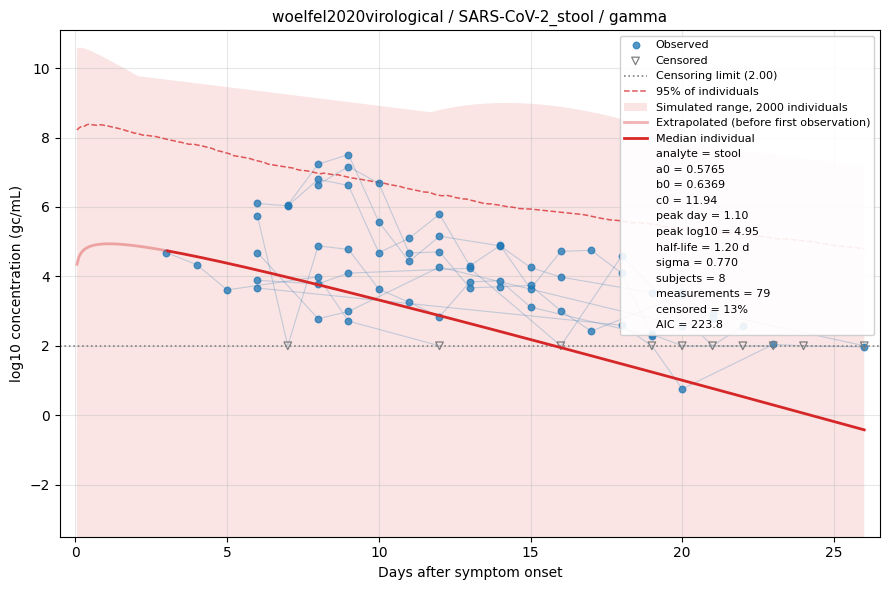
Virological assessment of hospitalized patients with COVID-2019

Identifier

woelfel2020virological

Participants

9

Measurements

382

Biomarkers

SARS-CoV-2

The authors conducted a virological analysis of nine linked cases of COVID-19 in Munich in early 2020. They quantified SARS-CoV-2 RNA gene copies in throat swabs and RNA concentrations in stool and sputum samples. Abundances were quantified using RT-qPCR assays targeting the E and RdRP genes as described in 10.2807/1560-7917.ES.2020.25.3.2000045. Values were programmatically extracted from the figure, resulting in a number of significant figures far exceeding the performance of the assays. The demographic data, including age and sex, are derived from the Challenger et al. BMC Medicine (2022) 20:25 https://doi.org/10.1186/s12916-021-02220-0 supplement combined dataset.

Prolonged viral shedding in feces of pediatric patients with coronavirus disease 2019

Identifier

xing2020prolonged

Participants

1

Measurements

36

Biomarkers

SARS-CoV-2

This study characterized the dynamic profiles of SARS-CoV-2 shedding in respiratory and fecal specimens in three children with COVID-19. However, complete specimen test value data were available for only one child. A total of 19 oropharyngeal swab specimens and 17 fecal specimens were collected.

Characteristics of pediatric SARS-CoV-2 infection and potential evidence for persistent fecal viral shedding

Identifier

xu2020characteristics

Participants

8

Measurements

107

Biomarkers

SARS-CoV-2

This study reported the epidemiological and clinical features of ten children infected with SARS-CoV-2 confirmed by real-time reverse transcription PCR assay of SARS-CoV-2 RNA and tested for evidence of viral excretion through the gastrointestinal and respiratory tracts. A total of 107 samples in both of nasopharyngeal and rectal swabs were collected and ct values were recorded by days after admission. The standard curve of transforming ct value into viral load was calculated based on the concentration provided by the author.

Laboratory Diagnosis and Monitoring the Viral Shedding of SARS-CoV-2 Infection

Identifier

yang2020laboratory

Participants

28

Measurements

361

Biomarkers

SARS-CoV-2

This study involved 3552 clinical samples from 410 COVID-19 patients confirmed by Guangdong CDC. Oropharyngeal swabs, nasopharyngeal swabs and sputum samples were tested for upper respiratory tract infection, while bronchoalveolar lavage fluid (BALF) was tested for lower respiratory tract infection.

Detection of fecal shedding of rotavirus vaccine in infants following their first dose of pentavalent rotavirus vaccine

Identifier

yen2011detection

Participants

22

Measurements

57

Biomarkers

rotavirus vaccine

This study, conducted between May 2008 and February 2009 at the Broadway Practice of the Ambulatory Care Network of New York-Presbyterian Hospital, examined fecal shedding of the pentavalent rotavirus vaccine (RV5) in infants aged 6 to 12 weeks following their first dose. The study involved 198 enrolled infants, with 103 returning stool collection kits. Rotavirus antigen was detected in 21.4% of the kits. The study used enzyme immunoassay (EIA) and RT-PCR to detect vaccine-type rotavirus in stool samples collected over 9 days post-vaccination. The findings suggest potential for horizontal transmission of vaccine virus, particularly in households with immunocompromised individuals.

Upper Respiratory Tract Levels of Severe Acute Respiratory Syndrome Coronavirus 2 RNA and Duration of Viral RNA Shedding Do Not Differ Between Patients With Mild and Severe/Critical Coronavirus Disease 2019

Identifier

yilmaz2020upper

Participants

54

Measurements

349

Biomarkers

SARS-CoV-2

The authors reported longitudinal viral RNA loads from the nasopharynx/oropharynx in patients with mild and severe/critical coronavirus disease 2019 (COVID-19). They also investigated whether the duration of symptoms correlated with the duration of viral RNA shedding. A total of 56 patients were included.

Epidemiologic Features and Clinical Course of Patients Infected With SARS-CoV-2 in Singapore

Identifier

young2020epidemiologic

Participants

18

Measurements

216

Biomarkers

SARS-CoV-2

Clinical, laboratory, and radiologic data were collected, including PCR cycle threshold values from nasopharyngeal swabs and viral shedding in blood, urine, and stool. The clinical course was summarized, including the requirement for supplemental oxygen, intensive care, and the use of empirical treatment with lopinavir-ritonavir. The numbers of positive stool, blood, and urine samples were small. Data for the nasopharyngeal swab results were obtained from the combined dataset in the supplementary materials of Challenger et al. (2022). The standard curve was calculated based on the concentration provided by Goyal et al. (2020).

SARS-CoV-2 viral shedding characteristics and potential evidence for the priority for faecal specimen testing in diagnosis

Identifier

yuan2021sars

Participants

10

Measurements

422

Biomarkers

SARS-CoV-2

This study investigates the shedding of SARS-CoV-2 RNA across multiple specimen types-including stool, respiratory secretions, urine, and serum-in both symptomatic and asymptomatic COVID-19 patients. It evaluates viral load dynamics and time to clearance across specimen types.

Alterations in Gut Microbiota of Patients With COVID-19 During Time of Hospitalization

Identifier

zuo2020alterations

Participants

15

Measurements

52

Biomarkers

SARS-CoV-2

The author measured SARS-CoV-2 detected by real-time reverse transcriptase PCR in fecal samples from 15 hospitalized COVID-19 patients in Hong Kong.