Fatal outcome of human influenza A (H5N1) is associated with high viral load and hypercytokinemia de2006fatal
Virological and immunological study of patients hospitalized in Ho Chi Minh City (2004–2005) comparing 18 individuals with influenza A(H5N1) (13 fatal, 5 non-fatal) and 8 patients with human influenza (H3N2/H1N1). Pharyngeal (throat) and nasal swabs, rectal swabs and blood were collected; viral RNA was quantified by real-time PCR targeting a conserved region of the influenza A matrix gene (results expressed as cDNA copies per ml of viral transport medium). The study reports higher pharyngeal viral loads and frequent detection of viral RNA in blood and rectum in H5N1 cases, and elevated plasma cytokine/chemokine levels that correlated with pharyngeal viral load.
Analytes
nasopharyngeal_swab_influenza_gc_per_mL
Quantitative real-time PCR detection of influenza A viral RNA (matrix gene) in nasal swab specimens (viral transport medium). Values reported as copies per ml of viral transport medium.
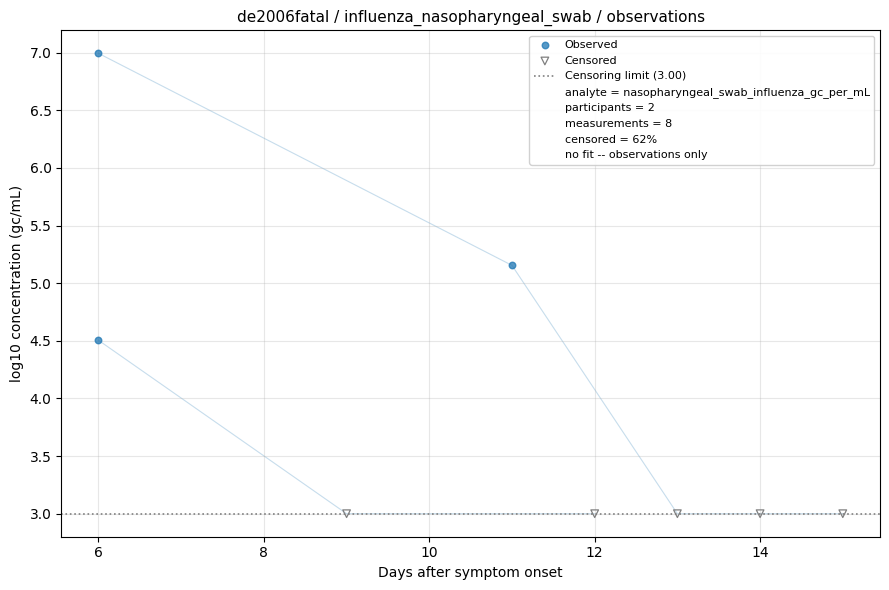
Measurements only — no shedding model is fitted to this analyte, usually because it is sampled once per participant, leaving no trajectory to fit, or because nothing was ever detected. Open triangles are non-detects, drawn at the assay's censoring limit. See the modelling methods for what these estimates do and do not support.
oropharyngeal_swab_influenza_gc_per_mL
Quantitative real-time PCR detection of influenza A viral RNA (matrix gene) in throat (pharyngeal) swab specimens (viral transport medium). Values reported as copies per ml of viral transport medium.
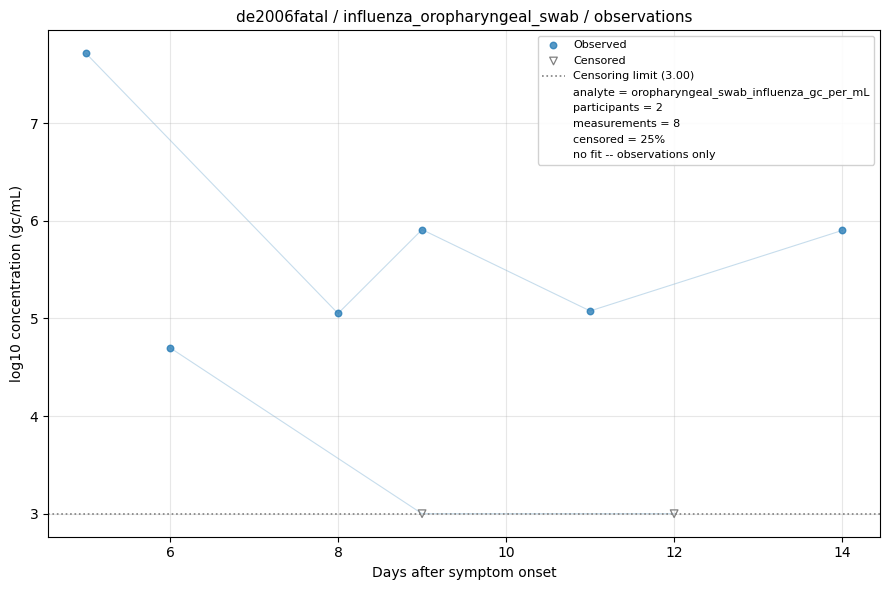
Measurements only — no shedding model is fitted to this analyte, usually because it is sampled once per participant, leaving no trajectory to fit, or because nothing was ever detected. Open triangles are non-detects, drawn at the assay's censoring limit. See the modelling methods for what these estimates do and do not support.
tracheal_aspirate_influenza_gc_per_mL
Quantitative real-time PCR detection of influenza A viral RNA (matrix gene) in tracheal aspirate specimens. Values reported as copies per ml of specimen.
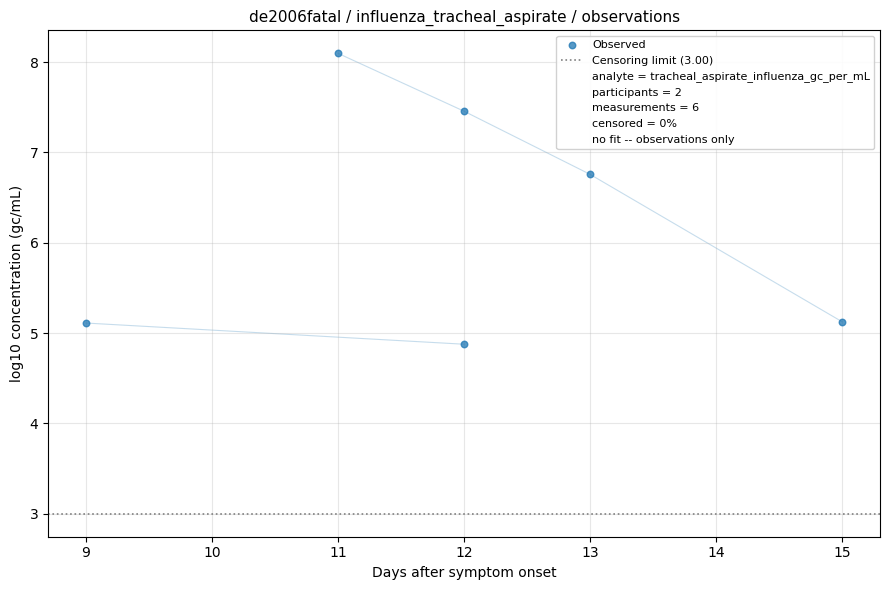
Measurements only — no shedding model is fitted to this analyte, usually because it is sampled once per participant, leaving no trajectory to fit, or because nothing was ever detected. Open triangles are non-detects, drawn at the assay's censoring limit. See the modelling methods for what these estimates do and do not support.