Assessing Viral Shedding and Infectivity of Tears in Coronavirus Disease 2019 (COVID-19) Patients seah2020assessing
This study investigated the potential transmission of SARS-CoV-2 through tears by detecting the virus using viral isolation and quantitative reverse-transcription polymerase chain reaction (RT-PCR) analysis. A total of 17 COVID-19 patients were enrolled in this prospective study in Singapore after obtaining informed consent. Researchers collected 135 nasopharyngeal swab samples and 32 tear samples throughout the study (all tear samples showed negative results for SARS-CoV-2 on viral isolation and RT-PCR). No evidence of SARS-CoV-2 shedding in tears was observed during the course of the disease. In conclusion, the findings suggest that the risk of SARS-CoV-2 transmission through tears is minimal.
Analytes
nasopharyngeal_swab_SARSCoV2
The presence of SARS-CoV-2 is assessed with viral isolation and quantitative reverse-transcription polymerase chain reaction (RT-PCR) analysis for patients’ nasopharyngeal swabs.
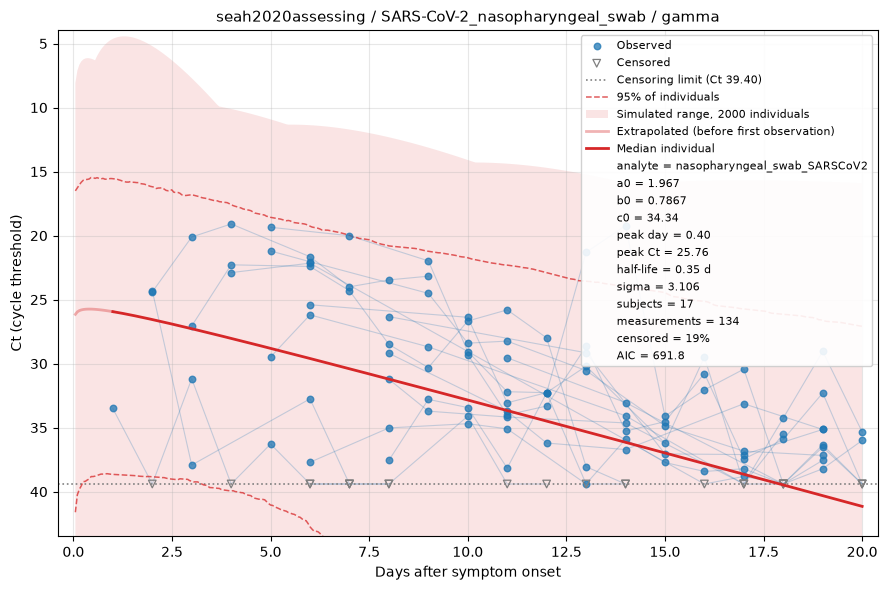
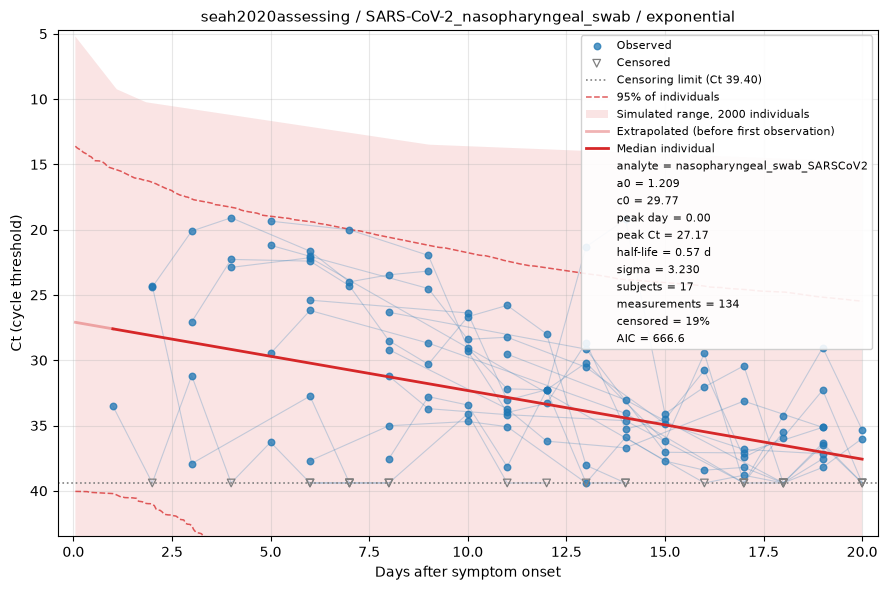
Fitted by censored maximum likelihood. The red line is the median individual; the shaded region is the full range of a simulated cohort drawn from the fitted population, so it shows what simulating from this dataset would produce rather than a confidence interval, with dashed lines at the central 95%. Open triangles are non-detects, drawn at the censoring limit and entering the fit as "below this value" rather than being dropped. See the modelling methods for what these estimates do and do not support.