Norwalk virus shedding after experimental human infection atmar2008norwalk
This study investigates the magnitude and duration of Norwalk virus shedding in feces following experimental human infection. Conducted at Baylor College of Medicine from September 2004 to October 2006, the study involved 16 healthy adults aged 18-50 who were inoculated with Norwalk virus. Participants were monitored for clinical signs and symptoms, and fecal samples were collected and analyzed using RT-PCR and ELISA methods. The study found that virus shedding began as early as 18 hours post-inoculation and lasted a median of 28 days, with peak virus titers occurring after symptom resolution. The study provides insights into the prolonged fecal excretion of norovirus and its implications for transmission.
Analytes
stool_norovirus
Norwalk virus RNA was detected in fecal specimens using immunomagnetic capture (IMC) RT-PCR and quantitated by real-time RT-PCR (qRT-PCR) with RNA transcripts as a standard. The limits of detection for the IMC RT-PCR and qRT-PCR assays were approximately 15 × 10^3 and 40 × 10^6 copies/g feces, respectively.
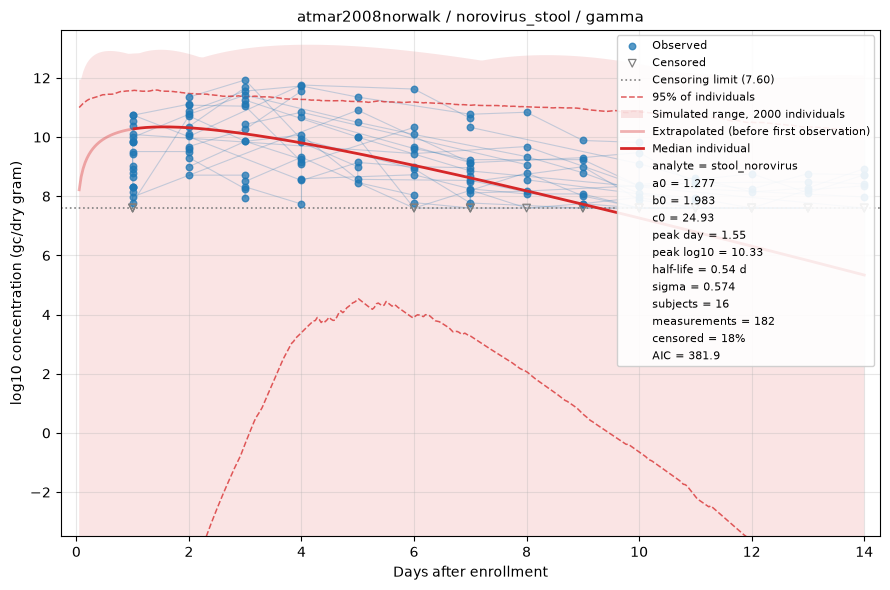
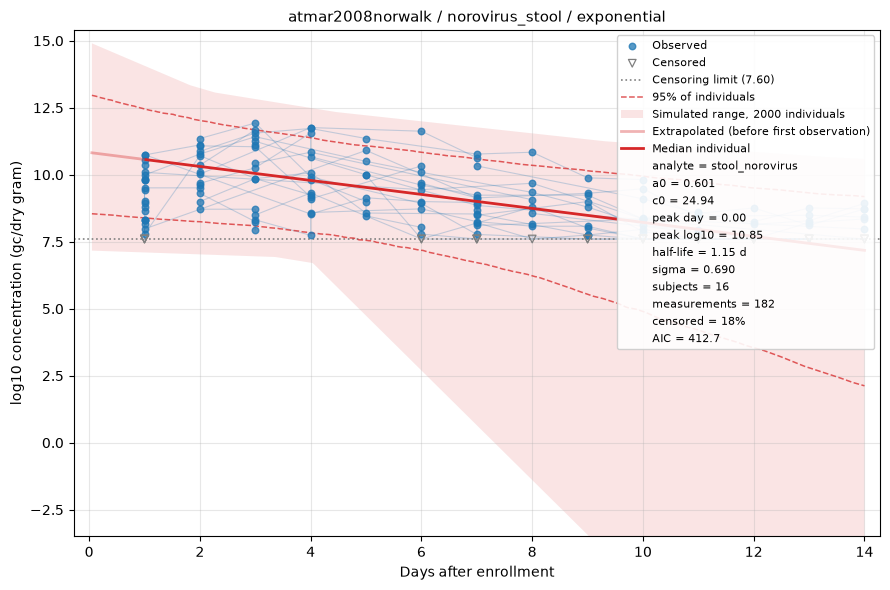
Fitted by censored maximum likelihood. The red line is the median individual; the shaded region is the full range of a simulated cohort drawn from the fitted population, so it shows what simulating from this dataset would produce rather than a confidence interval, with dashed lines at the central 95%. Open triangles are non-detects, drawn at the censoring limit and entering the fit as "below this value" rather than being dropped. See the modelling methods for what these estimates do and do not support.