Shedding of porcine circovirus type 1 DNA and rotavirus RNA by infants vaccinated with Rotarix® mijatovicrustempasic2017shedding
This study investigated the shedding of porcine circovirus type 1 (PCV-1) DNA and Rotavirus group A (RVA) RNA in 33 infants aged approximately 2 months following the first dose of Rotarix® vaccine. Stool samples were collected serially post-vaccination and analyzed using molecular methods. The study found that 21% of infants did not shed RVA RNA beyond day 3, suggesting a lack of vaccine virus replication in some cases. The study was conducted in Atlanta, Georgia, and involved both full-term and preterm infants. The analysis used quantitative real-time RT-PCR and qPCR assays to detect viral RNA and DNA in stool samples.
Analytes
stool_rotavirus_vaccine
Detection of Rotarix® Rotavirus group A RNA in stool samples post-vaccination using qRT-PCR targeting the NSP3 gene of RVA.
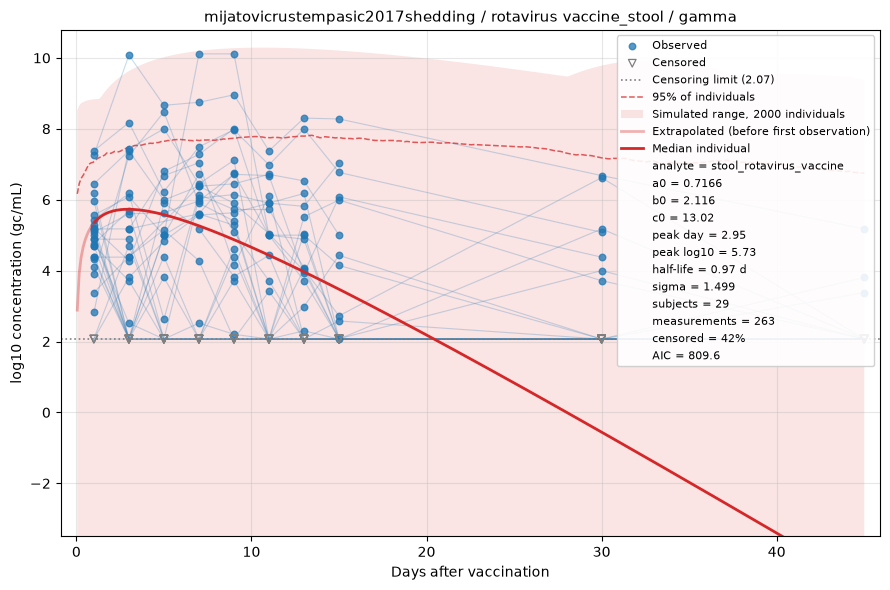
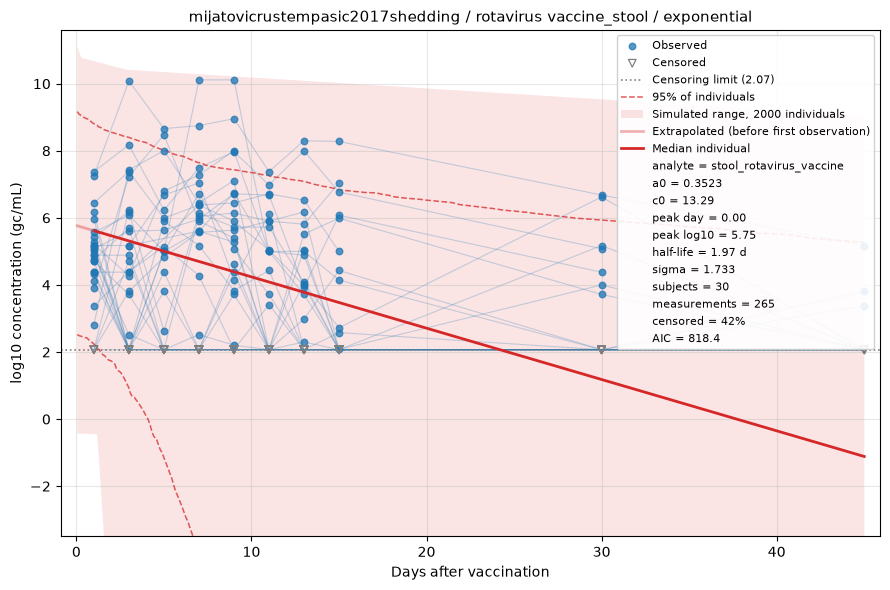
Fitted by censored maximum likelihood. The red line is the median individual; the shaded region is the full range of a simulated cohort drawn from the fitted population, so it shows what simulating from this dataset would produce rather than a confidence interval, with dashed lines at the central 95%. Open triangles are non-detects, drawn at the censoring limit and entering the fit as "below this value" rather than being dropped. See the modelling methods for what these estimates do and do not support.
stool_pcv1_dna
Detection of Rotarix® PCV-1 DNA in stool samples post-vaccination using qPCR.
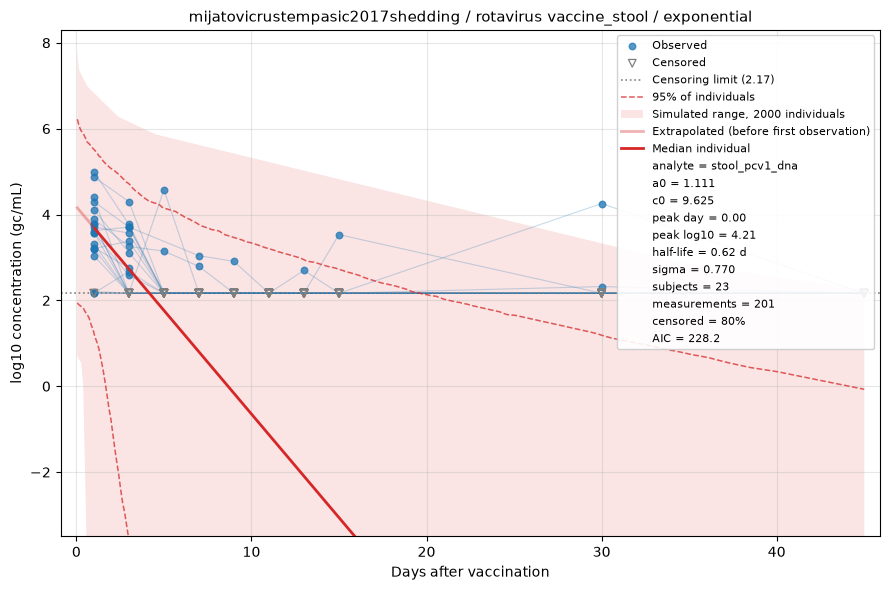
Fitted by censored maximum likelihood. The red line is the median individual; the shaded region is the full range of a simulated cohort drawn from the fitted population, so it shows what simulating from this dataset would produce rather than a confidence interval, with dashed lines at the central 95%. Open triangles are non-detects, drawn at the censoring limit and entering the fit as "below this value" rather than being dropped. See the modelling methods for what these estimates do and do not support.